
A research team that never stops.
Each autonomous lab pursues one line of inquiry around the clock. By our estimate, one lab does the work of 10 to 150 researchers, depending on the task. Set one up in under five minutes, or a dozen at once.
Rigor, built into the machine.
An autonomous lab works the way a good lab does: researchers who each bring their own approach, a reviewer who checks the work, a PI who decides, and a notebook that misses nothing. Add a model of measured biology, and keep it running day and night.
In
Work the question
Review
Decide
Test
10–150
By our estimate, each autonomous lab does the work of 10 to 150 researchers, depending on the task.
Around the clock, every day. It doesn’t replace your people. It gives each of them a team.
The record
A lab, not a single mind
Every question gets several researchers, each working it their own way. A finding counts when it holds up across them, and when it doesn’t, the lab says why.
Checked before it counts
Nothing reaches you until it has been reviewed against the data. What doesn’t hold up is struck, and the strike stays on the record.
Measured biology, built in
Archimedes, our model trained on real experimental measurements, places your samples among hundreds of thousands of them, so the lab reasons over data rather than over what has been written about it.
Experiments designed to decide
When the data can’t settle a question, the lab designs the experiment that can, with controls and a plan for reading the result before it comes back.
A notebook that misses nothing
Every step is written down as it happens and linked to what it builds on. Dead ends stay as visible as wins, and changing its mind is a new entry, never an edit.
Real code, in your project
The scripts behind every result, with the data, tables and figures they produced, live in your project. Anyone can open them and run them again.
Many labs, one program.
Put several labs on one question. Each keeps its own record and its own line of experiments, and labs attached to the same data space build on what the others add.
Triangulate
Several angles on one question.
Build on each other
A shared data space, so no lab starts cold.
Reallocate
Add labs where the signal is. Pause the rest.
In silico, at your bench, or at a partner lab.
In silico
Kanon, Archimedes, and heavy compute for analysis and molecular design.
Your lab
Your bench, your instruments, your team. The lab designs the experiment, and you run it.
Partner labs
A network of core facilities and CROs that run the assay every day and send the data straight back.
Nothing reaches the bench without you.
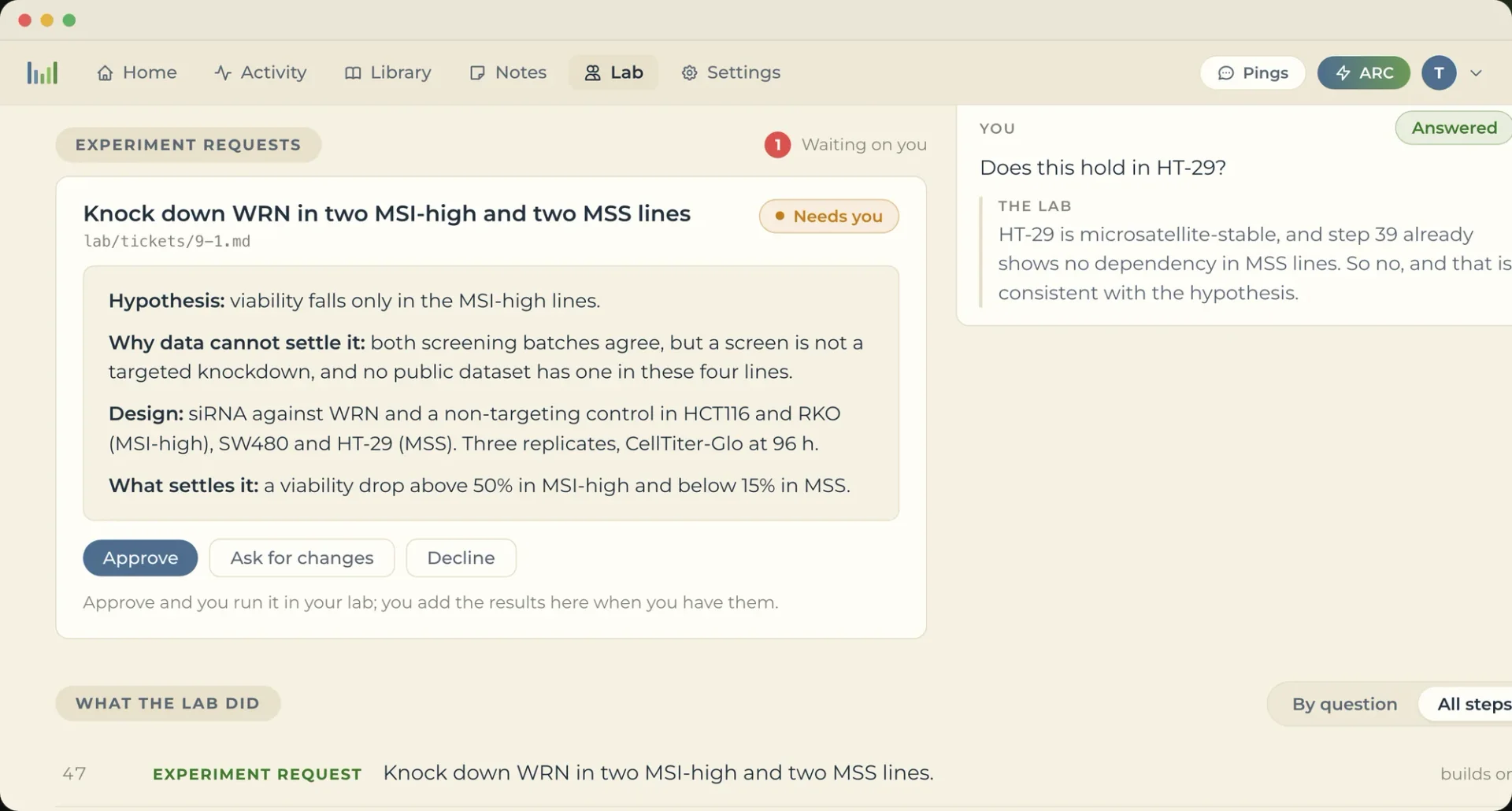
Every wet-lab experiment waits for your approval. Computational work runs on its own, inside the budget you set. Approve in Heureka Bench, or on your iPhone for work at your own bench.
Wet lab
Approve every experimentEach design arrives with its hypothesis, controls, and what would settle it.
In silico
Run within a fixed budgetAnalysis and compute keep going around the clock, up to the limit you choose.
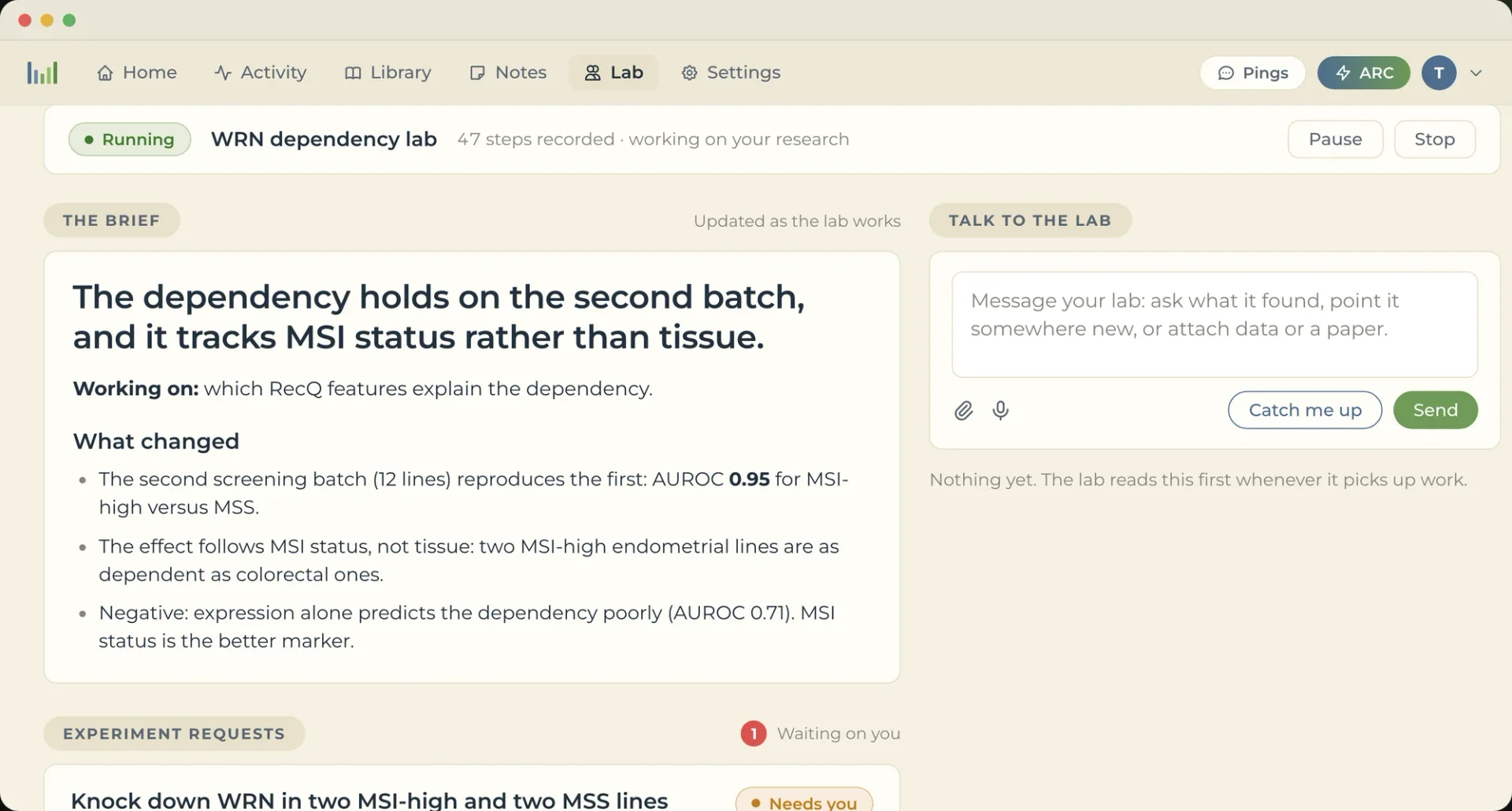
A brief at the hour you choose.
Daily, weekly, or only when the lab needs you. Every dataset, script, figure, and entry lands in your project, ready to build on or take with you.
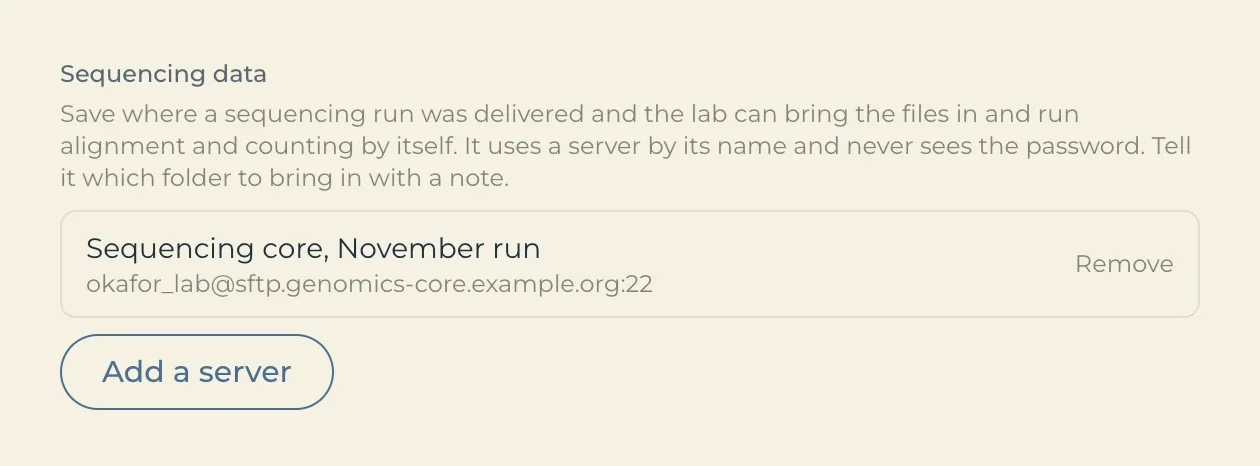
Give a lab your sequencing server.
Save where a sequencing run was delivered, and the lab brings the files in and runs alignment and counting by itself.
From a target to a molecule worth making.
A lab doesn’t stop at the target. It can predict the structure of a protein or a complex, design binders against it, and compare the candidates, with every step on the same record.
A predicted structure is a prediction, and the lab labels it as one. When the answer matters, it asks for the experiment.
Werner syndrome helicase (WRN) with ADP bound. An experimental structure from the Protein Data Bank, entry 6YHR.
One lab per question. As many as you need.
Autonomous Lab
A single lab running 24/7
One line of inquiry, pursued around the clock.
Autonomous R&D Department
Labs working together
A series of labs that share data and build on each other, as a virtual R&D department. Discounts at 5, 10, and 25 labs.
Options
Built around your program
On-prem and air-gapped, single tenancy, MCP plug-ins, and orchestration with ARC.
Autonomy, with limits you set.
An approval gate
No wet-lab experiment runs until you approve it.
A budget cap per lab
Compute and any optional third-party models stay within the limits you set for each lab.
Pause or stop any time
Pause a lab and it finishes the run in progress, then waits. Give it a stop condition and it pauses itself.
Watch a lab at work.
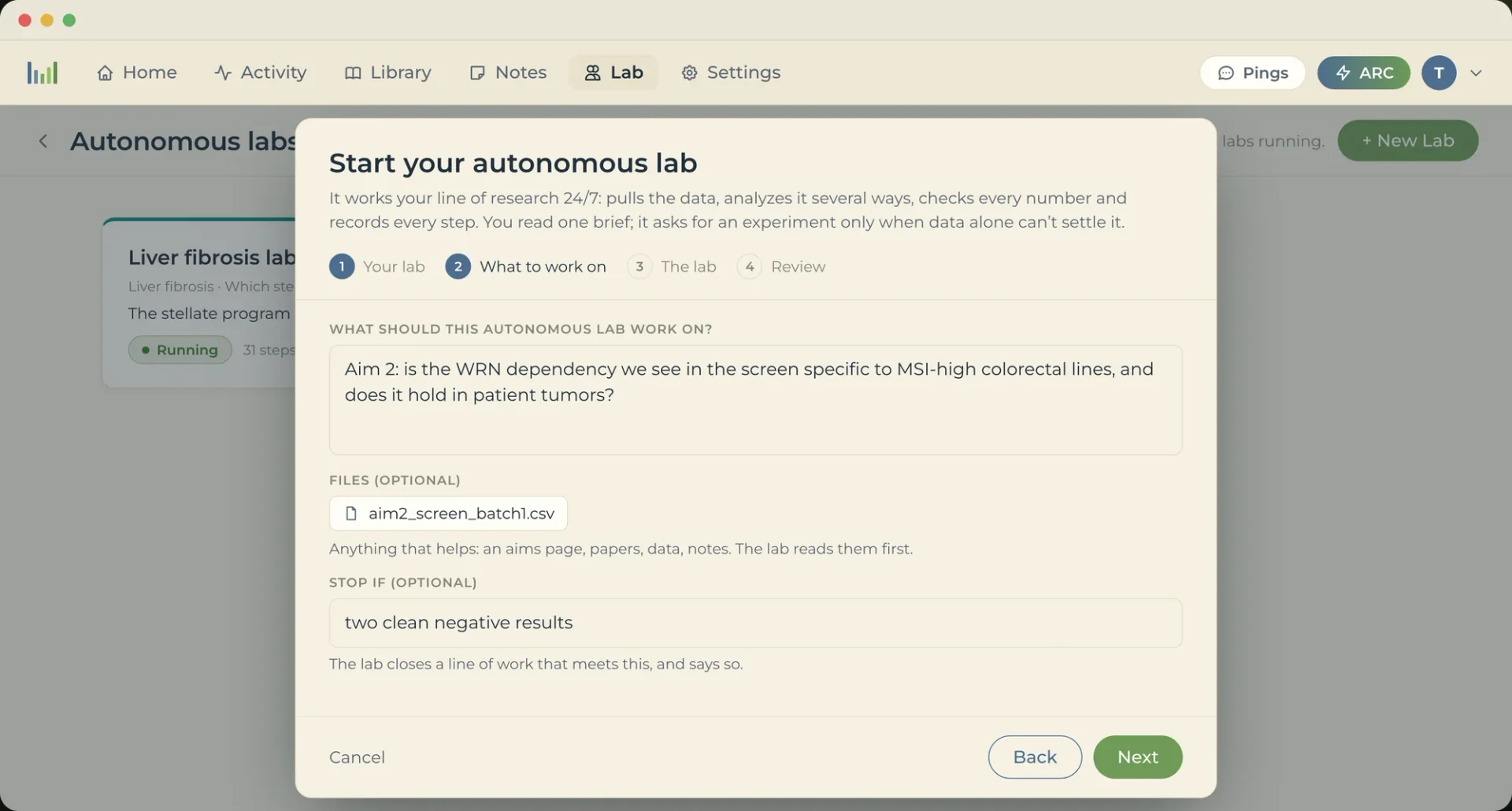
Ninety seconds, start to finish: setting a lab up, reading its brief, steering it, and approving an experiment. Shown in Heureka Bench with example data.
Autonomous labs, answered.
What is an autonomous lab?
A research team that works one line of inquiry around the clock. It reads your data and the literature, forms hypotheses, designs the experiment that would settle each one, analyzes what comes back, and proposes what to do next. Every step lands in your project.
How many labs can I run?
As many as you have questions. Add labs any time and pay a prorated amount for the rest of the period. A lab you remove keeps running until the end of the period you paid for.
Do labs share what they learn?
Each lab keeps its own record. Attach the same data space to several labs and each one reads what the others add, so a new lab doesn’t start cold.
Can labs run without human approval?
Computational work, yes, within the budget you set for each lab. Wet-lab experiments, no: every one waits for your approval.
Where do wet-lab experiments run? Can I use my own lab?
At a partner lab, or at your own bench. The lab designs each experiment, you approve it, and the results come back into your project.
How do I follow progress?
A brief at the hour you choose: daily, weekly, or only when the lab needs you. Follow along in Heureka Bench, in Heureka Console on the web, or on your iPhone.
Do I need an account?
Yes. Labs are set up in Heureka Bench, with a free Heureka account.