Heureka Bench and the platform behind every lab

Your discoveries happen faster.And they stay yours.

Our own models, agents, and autonomous labs, built for biomedical discovery and running in our cloud or yours.

Download for macOSHeureka Bench is free.
Start freeFree account, no credit card.

Ninety seconds in Bench, shown with example data.

Why this exists

Most of biology has never been written down.

Every public experiment ever run still exists as measurements. What was published from each one is the question the study set out to answer. The relationships nobody asked about are still in the data, unwritten and unsearched. We build models for that space.

A paper is a slice of an experiment

Studies report what they set out to test. The rest of the measurement stays in the data, never written up, and no search will find it.

A model of text stops where text stops

Language models are bounded by what has been published. Scale changes how well they read that record, not what is in it.

Your own files can only restate themselves

Your data holds what you measured and what you named. The connections between your datasets, and to everyone else’s, live outside them.

What is Heureka?

A biology model, a scientific agent, and the notebook they work in.

The model is the reason it works. The notebook is where it happens: a desktop application you install, with your data on your own disk.

Archimedes

The biology model

A proprietary model trained on hundreds of thousands of measured biological samples, not on text, so Heureka can place and quality-check your data in ways a general language model can’t.

ARC

The scientific agent

Ask in plain language and ARC does the work: bioinformatics, statistics, figures, and literature. It shows every step and logs the code that produced it.

Heureka Bench

The notebook

Experiments, datasets, papers, protocols, and inventory in one local-first workspace. It is why the model can work on your actual files.

Archimedes

Your samples, placed among hundreds of thousands.

Archimedes learns from measured experiments, not from what was written about them. It places a new sample among the ones it has seen, so data from different labs and studies can be read side by side.

What you can ask it, in Heureka Bench

Place a sample

Read an expression profile’s likely tissue, disease, and nearest cohort.

Flag mislabels and new states

Catch a sample that doesn’t match its label. That is quality control, or the first sign of something new.

Look across data types

See how genes, methylation sites, and microRNAs relate to one another.

Connect molecules to phenotypes

Link a gene, methylation site, or microRNA to the tissues and diseases it marks.

Bridge patients to models

Find the reference cell lines most similar to a tumor or patient sample, for follow-up experiments.

Answers with their caveats

Every answer comes back with its source and its confidence, so you can see what the model knows and where it is unsure.

Live in Heureka Bench

Ask in plain language inside ARC. Archimedes runs as a set of tools and returns structured, sourced answers.

Your data, your model

For teams with proprietary data, we build a private model on top of Archimedes. Your data stays isolated and is never used to train anyone else’s model.

A proprietary stack built for biology

Built on measured biology, not just text.

Two-thirds of human genes have fewer than 10 papers each. Text-trained AI stops where text stops. Archimedes learns from hundreds of thousands of measured biological samples.

Desktop

Heureka BenchThe local-first notebook, and where labs are set up.

Web

Heureka ConsoleYour projects and labs in the browser.

iPhone

Heureka MobileBriefs, questions, and requests on the go.

Agents and labs

ARC and autonomous labsThe agents that run your analyses and write the record, and the labs that pursue a question around the clock.

Wet lab

Partner-lab networkCore facilities and CROs that run the experiments labs design.

Research model

KanonHeureka’s everyday research model, purpose-built for biomedical discovery.

Data models

ArchimedesA suite of data models trained on measured biology, alongside heavy compute for analysis and molecular structure design.

Follow from anywhere

Your labs, on every screen.

Read the brief and steer a lab from Heureka Bench, Heureka Console on the web, or your iPhone. Every wet-lab experiment waits for your approval; computation runs within the budget you set.

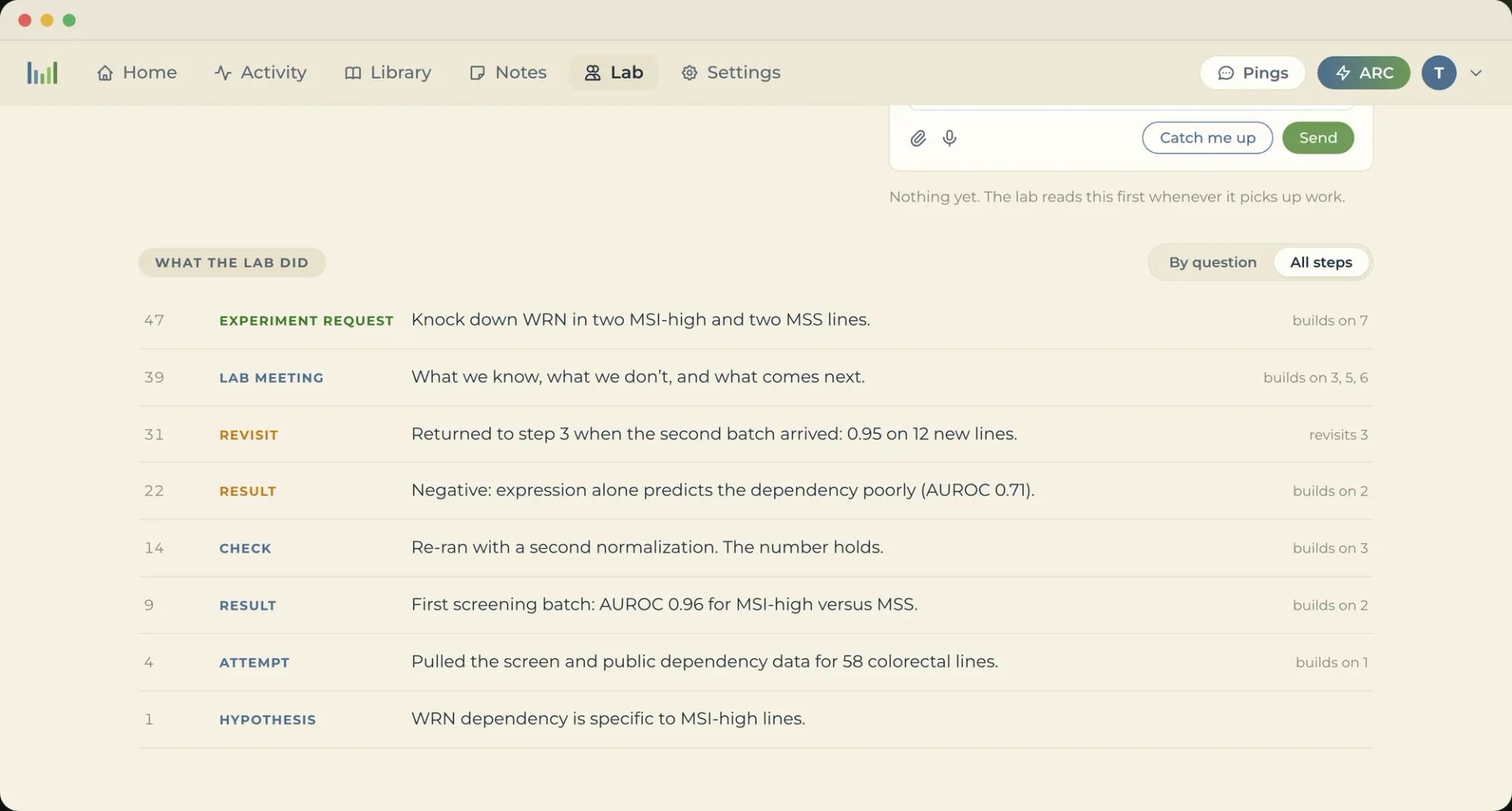
The record of an autonomous lab in Heureka Bench: each step with its kind, its result, and the steps it builds on
Research results

Research results

Pre-registered where it matters, reported in full, including what didn’t work.

Pre-registered study · Oct 2026

43% fewer experiments to reach the same result, and 57% more targets found in the same experiment campaign.

An estimated $91K–$455K saved per target campaign.

Read the study

BixBench · Aug 2026

18.7% more accurate on BixBench numeric-answer questions.

On the questions graded against a stated numeric interval, where the grader has the least room to interpret.

Read the study

Nature Metabolism · 2025

An AML target identified with Heureka was published in Nature Metabolism (2025).

Nature Metabolism

Pathway coessentiality mapping reveals complex II is required for de novo purine biosynthesis in acute myeloid leukaemia.

Read the paper

Data spaces example run · Aug 2026

The experiments you already ran.

A data space turns a lab’s measured history into objects, then lets a model trained on measured biology extend them, on your own machine, with nothing uploaded.

Read the post

How we report

The same rules for every result.

Pre-register first

We write down the question, the metric, and what would count as success before a study runs.

Report what was discarded

Excluded runs, deviations, and the analysis they change are stated next to the result.

Label estimates and partial runs

An estimate says it is an estimate. A partial run says it is partial.

Research

We build our own models, and the data they learn from.

Heureka is a research company first. Archimedes is the model you can use today. It isn’t the only one we’re building.

Biological representation

A way to compare expression, methylation, and microRNA data directly, learned from measured experiments.

Molecules and their targets

Sequence-level models of how a molecule meets a protein, and where on that protein it lands.

Perturbation and response

How a cell changes when you intervene, and how far that carries to samples you can’t run the experiment on.

Heureka Bench

Your lab, in one place.

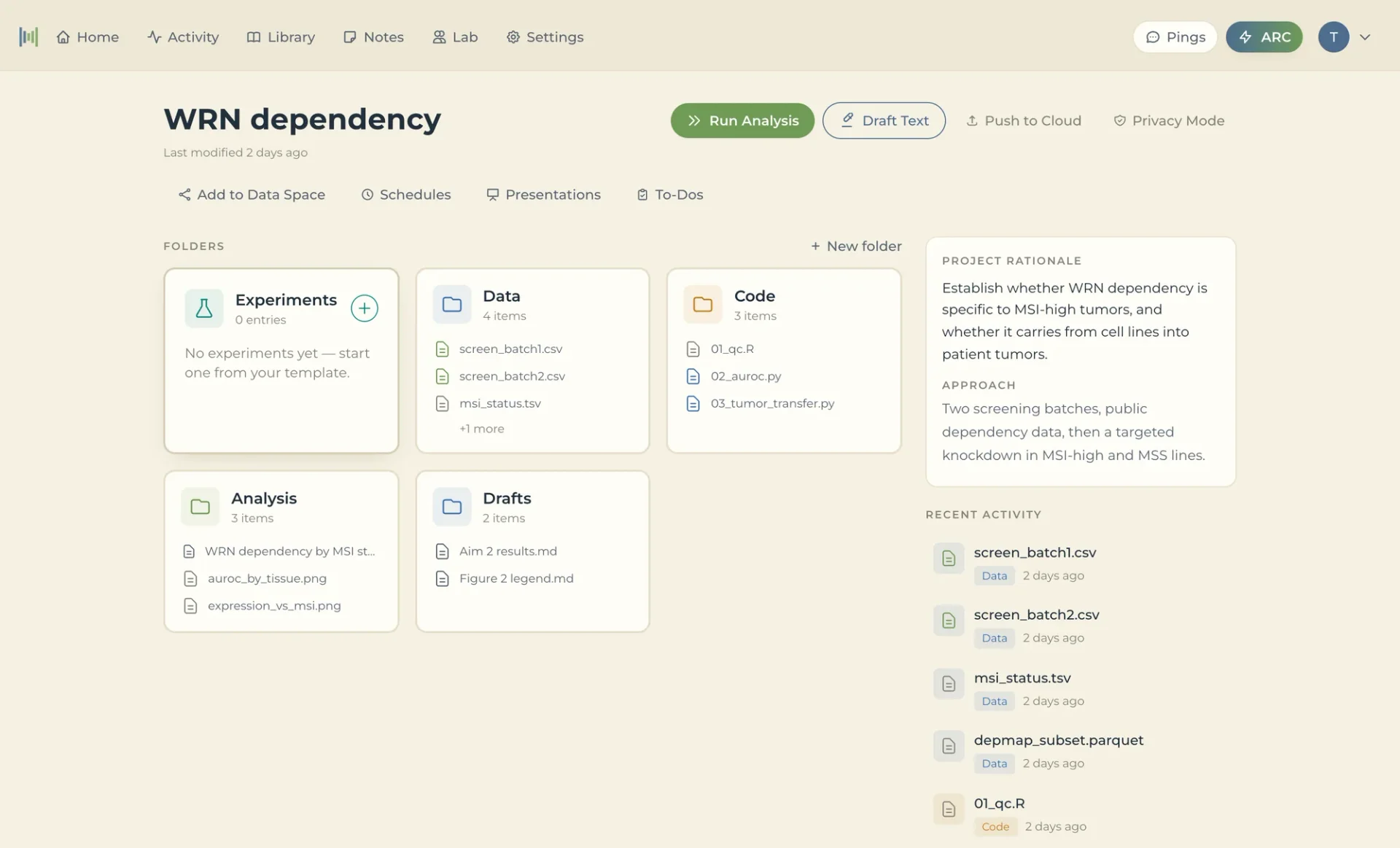
All your research, one place

  • Organize experiments, datasets, and analyses by research question
  • Local and cloud storage with workspaces
  • Agentic search across all your data and projects
A project in Heureka Bench: folders for data, code, analysis and drafts, the project rationale, and recent activity

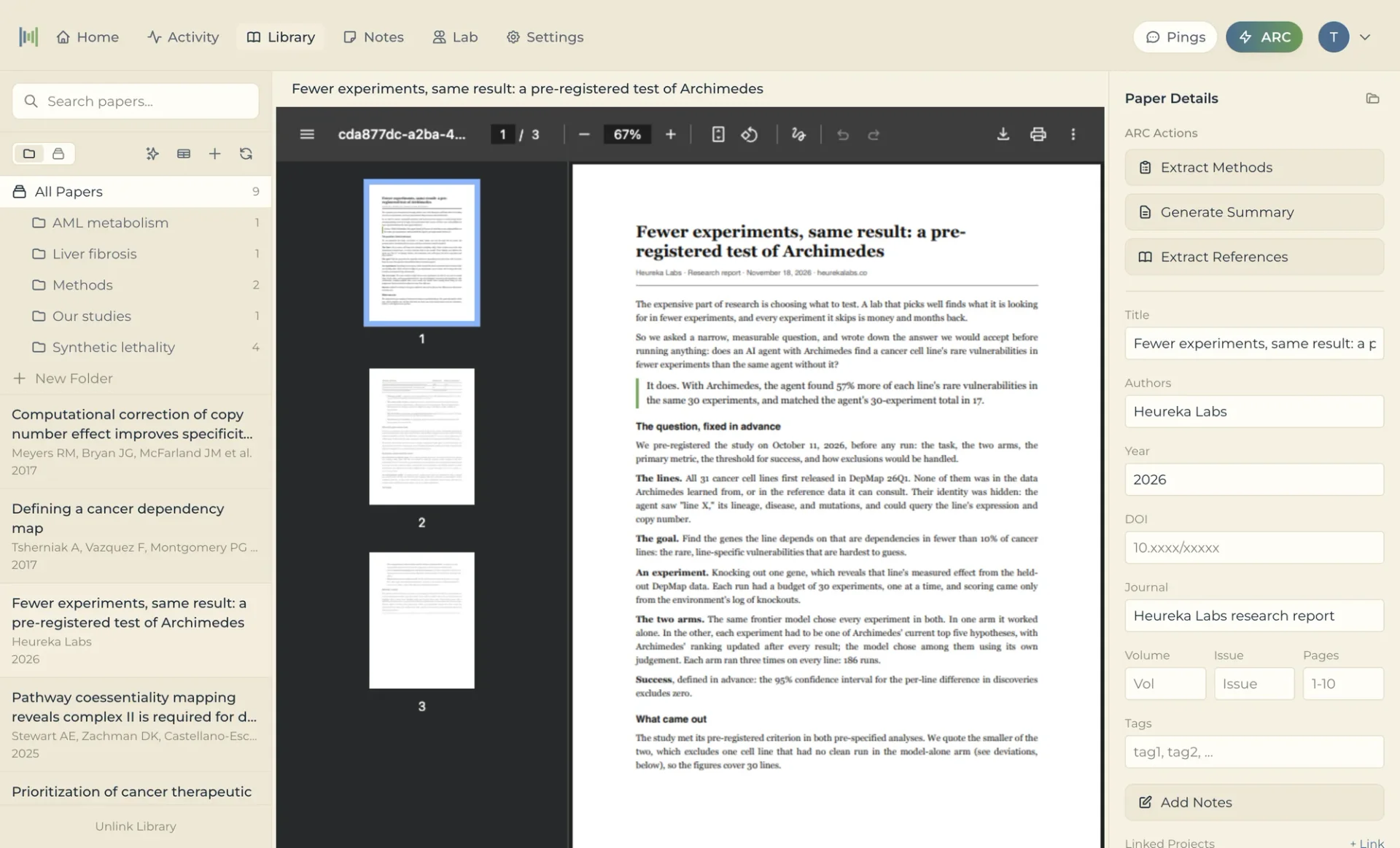
Curate your paper library

  • Import by DOI, with metadata and abstract extracted for you
  • Read and annotate PDFs inline
  • Summaries, methods extraction, and links to your projects
The paper library in Heureka Bench with a research report open beside its details and ARC actions

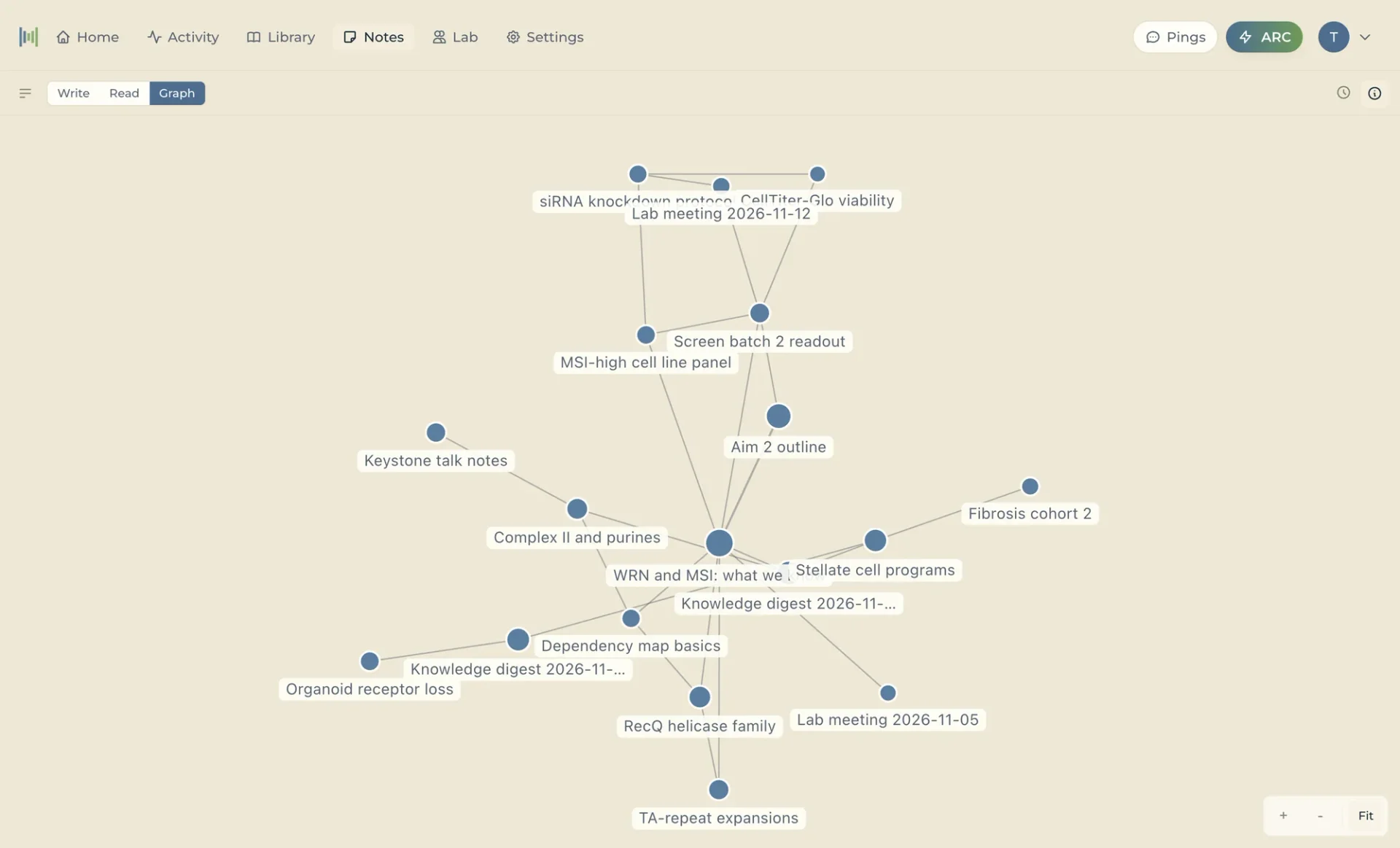
See how your ideas connect

  • Notes with links in both directions
  • A visual graph of your research
  • Digests that surface patterns across your notes
Notes in Heureka Bench shown as a graph of linked ideas

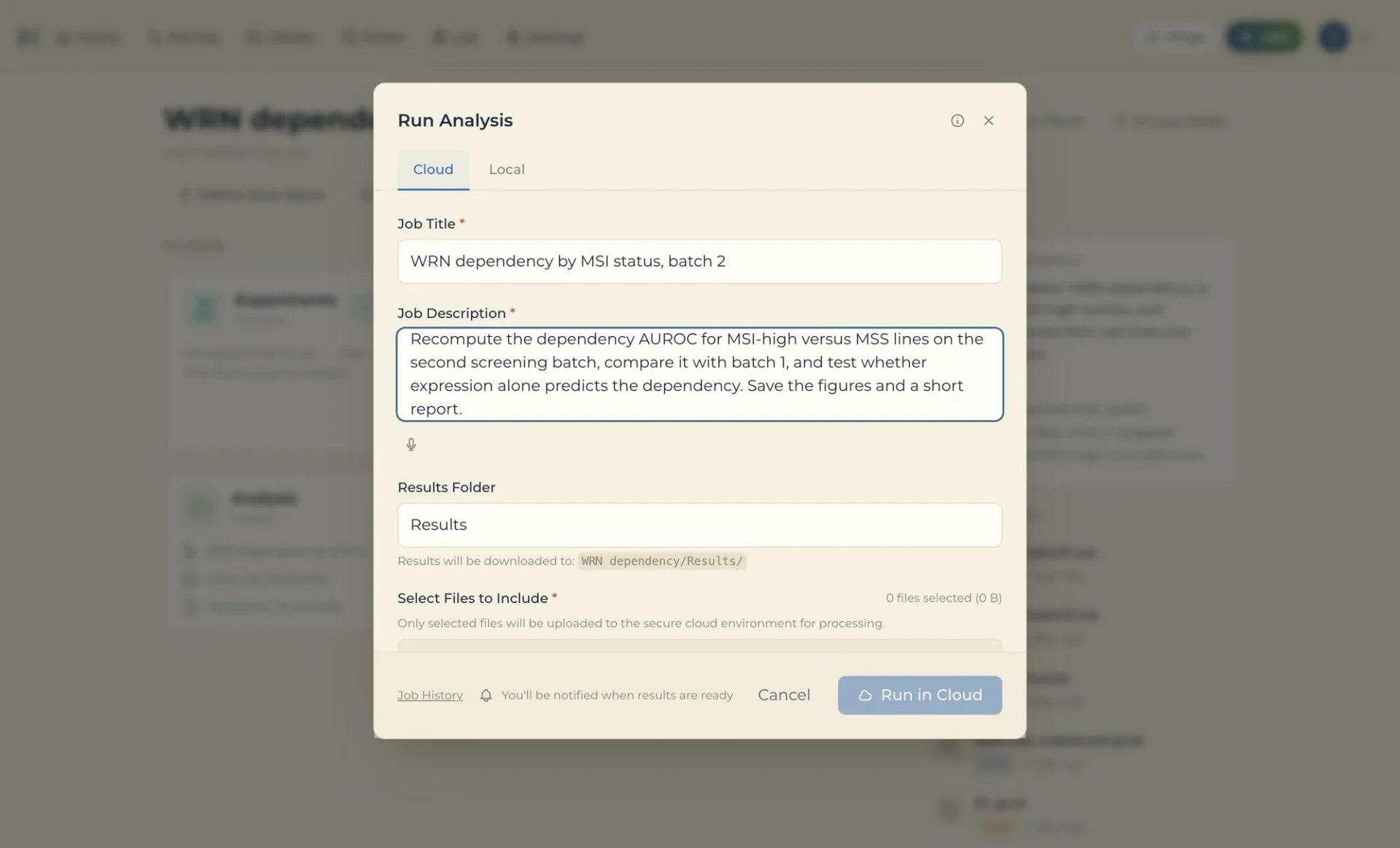
Cloud compute, from your desktop

  • Run heavy analyses without leaving Bench
  • Select the data and describe the job
  • Results sync back to your project
The Run Analysis dialog in Heureka Bench, with Cloud and Local tabs, set to run a described job in the cloud
Sequencing data

From your sequencing core to counts, in one step.

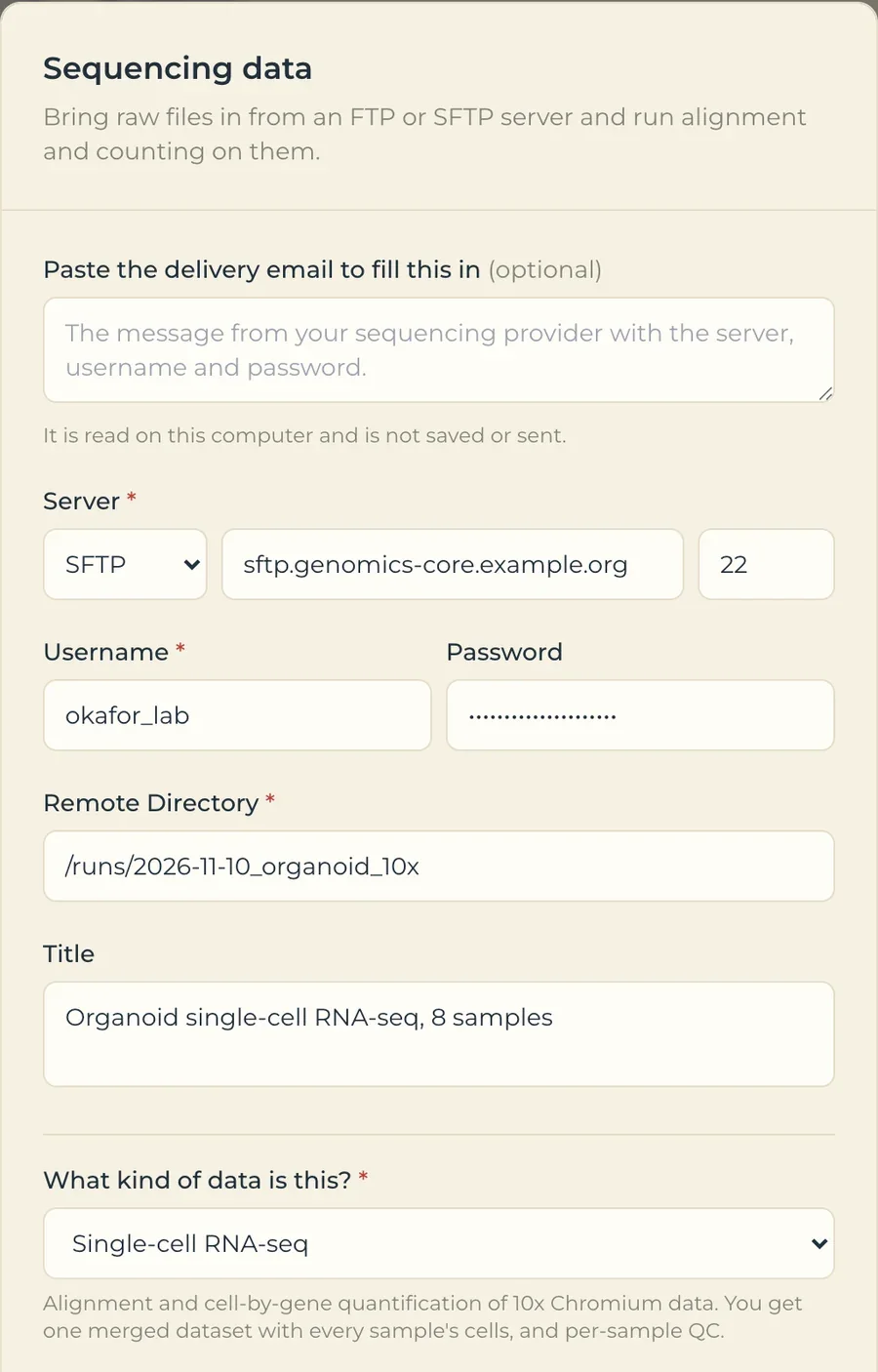
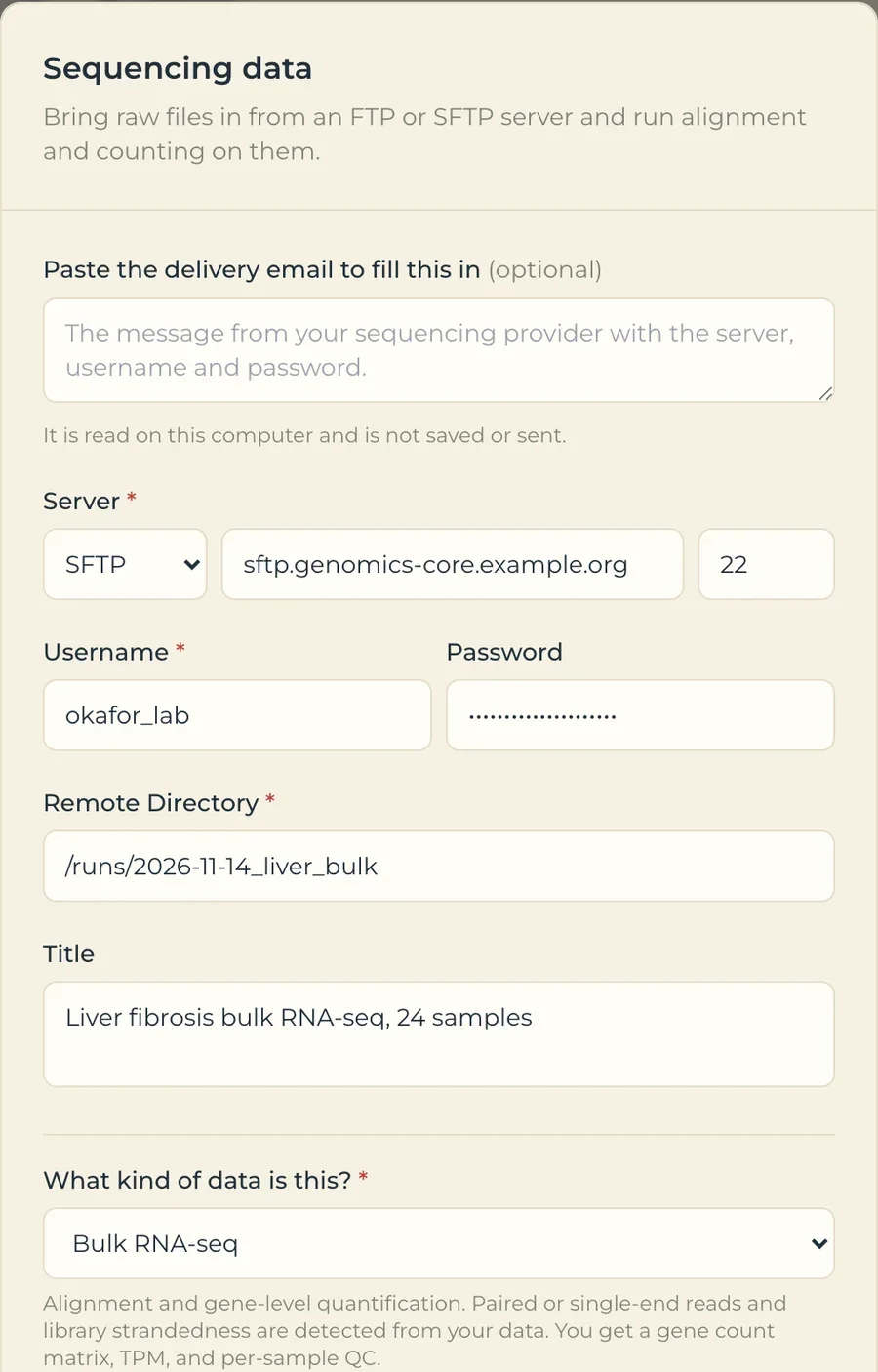
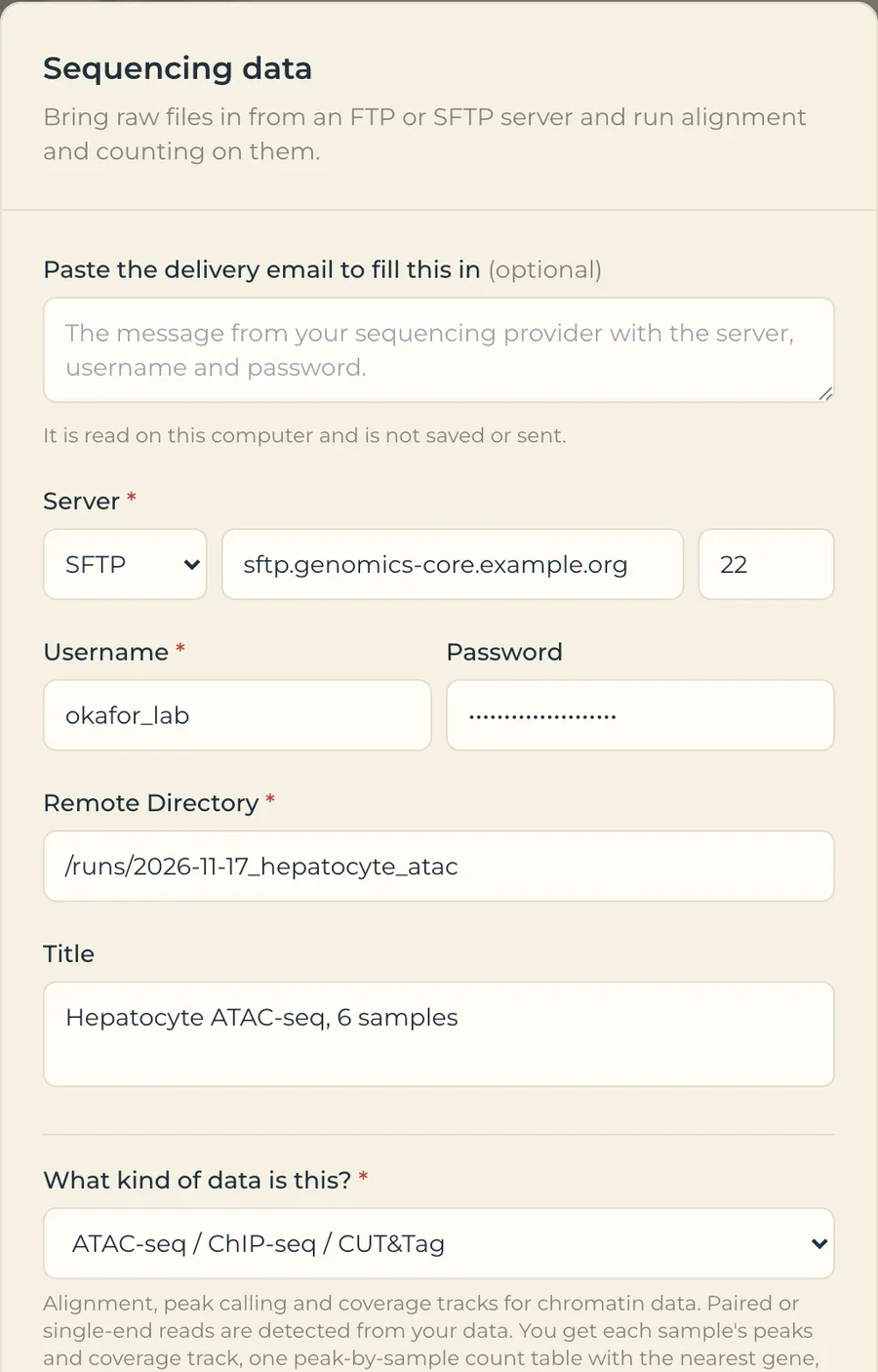
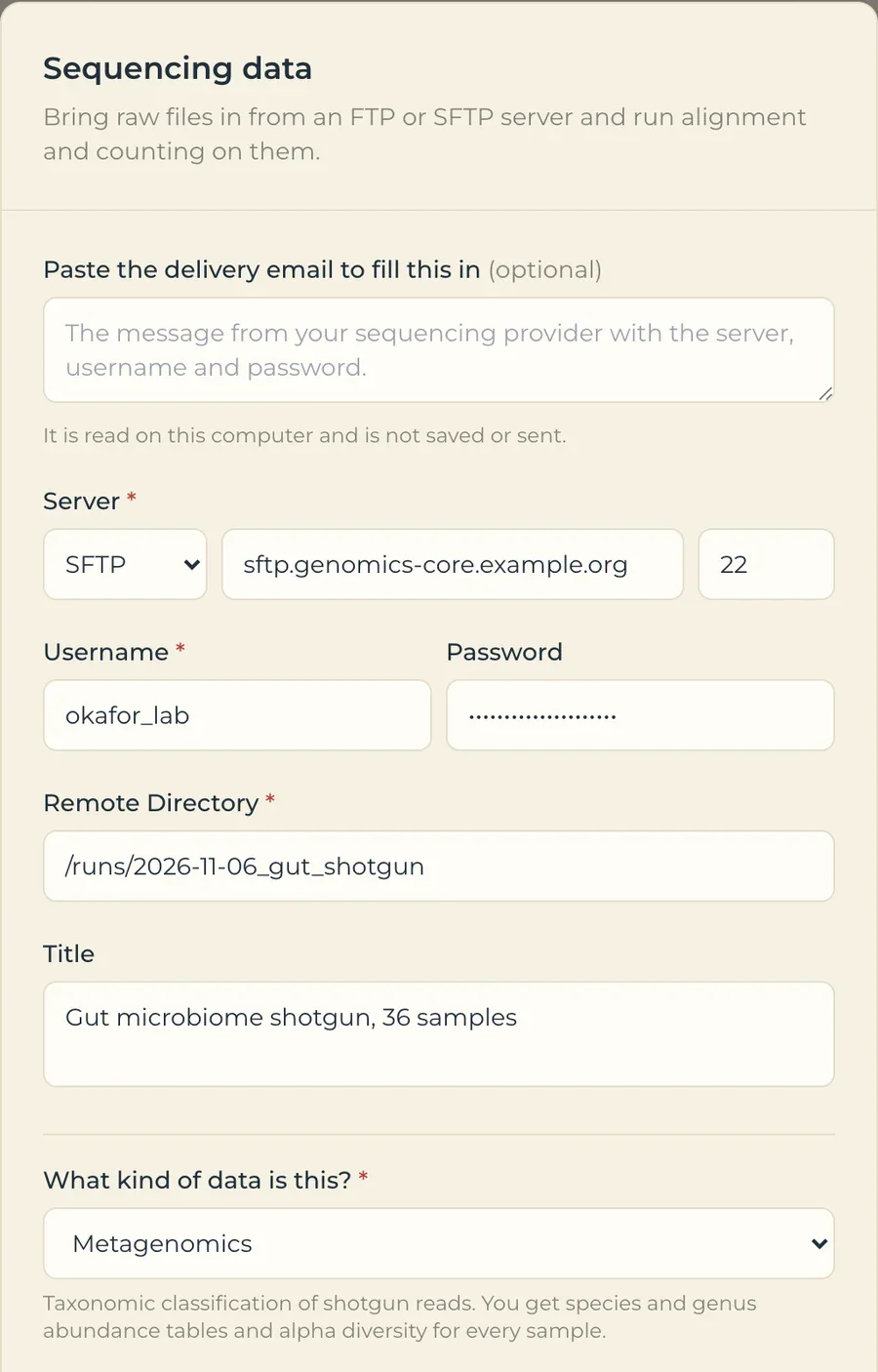
Point Bench at the FTP or SFTP server where your raw files are and say what kind of data it is. Bench transfers the files, runs alignment and counting in the cloud, and puts the results in your project.

The Sequencing data screen in Heureka Bench set to single-cell RNA-seq

Single-cell RNA-seq

Alignment and cell-by-gene quantification of 10x Chromium data, chemistry v2, v3, or v4. You get one merged dataset with every sample’s cells, and per-sample QC.

The Sequencing data screen in Heureka Bench set to bulk RNA-seq

Bulk RNA-seq

Alignment and gene-level quantification. Paired or single-end reads and strandedness are detected from your data. You get a gene count matrix, TPM, and per-sample QC.

The Sequencing data screen in Heureka Bench set to ATAC-seq, ChIP-seq and CUT&Tag

ATAC-seq, ChIP-seq, and CUT&Tag

Alignment, peak calling, and coverage tracks for chromatin data, CUT&RUN included. You get each sample’s peaks and coverage track, one peak-by-sample count table, and per-sample QC.

The Sequencing data screen in Heureka Bench set to metagenomics

Metagenomics

Taxonomic classification of shotgun reads. You get species and genus abundance tables and alpha diversity for every sample.

Paste the delivery email

Paste the message from your sequencing core and Bench fills in the server, username, and folder. It is read on your computer.

You set the limit

The analysis starts by itself only if its estimate is at or under the credit limit you choose. Above it, nothing starts until you approve.

Pay for what runs

The cost is estimated once the transfer finishes, and you are charged for the compute time actually used.

Also in Bench

And everything else the lab runs on.

Lab inventory

Reagents, consumables, equipment, and animal colonies in one view, with low-stock alerts.

Sequencing, ready to analyze

Single-cell and bulk RNA-seq, ATAC-seq, ChIP-seq, CUT&Tag, and metagenomics, straight from your sequencing core’s server.

Scheduled tasks

Literature scans, hypothesis generation, and analyses that run on their own schedule.

Findings to slides

Build decks from your research. Figures update when the underlying data does.

From a customer
“AI helps us identify mechanisms of action and the patients most likely to respond. For biotech, it isn’t an advantage. It’s a necessity.”
Genflow BiosciencesGenflow Biosciences · SIRT6 gene therapy development, 2025
Privacy and security

Your data, your machine.

Local-first

Your files, data, and analyses stay on your disk. The cloud is opt-in, per job.

Privacy Mode

Lock a project and every tool that could send data out is blocked at our server. Only the model call leaves.

Never trained on your data

Your data stays isolated and private, including any custom model we build on it.

Air-gapped on-prem and single-tenant options

Start your first lab.

Download Heureka Bench, point a lab at a problem, and read what it found in the morning.